

- Joined
- Nov 21, 2019
- Messages
- 6,792
- Reaction score
- 124,313
- Points
- 11
- Age
- 55
- Location
- Орёл
- 💎VM
- 432,131.50
- New country
- 🌐Единия
- Enneatype
- 5 (?)
- Gender
- Male
- Ashram resident
- Yes
This topic has once again turned into another free course. I wasn't even planning to do this, but the information goes beyond simply being an article or practice.
As you know, the main practice for working with the Rod here is: Description of all the School's paid courses
There I provide the correct technique for creating a Rodovoye Drevo and working with the Rod. Many people have heard of it, and many create it using their own methods or methods that are already known (so to speak, generally accepted). How to create a Rodovoye Drevo and which method to choose is your decision.
In my course, I explain one of the ancient methods of creating a Rodovoye Drevo. And judging by the feedback, it resonates with many people. Because you are not simply doing something—you understand what you are doing and why.
This method is quite simple. It is accessible to everyone.
What do I mean?
For many people, a Rodovoye Drevo primarily consists of a tree in the background with photographs placed on it: of their father, mother, grandmother, great-grandfather, and so on. Everyone has this same image in mind—a kind of tree, usually with black-and-white photos of relatives on it. A classic, so to speak.
And that is good.
At the very least, make the photographs colorized. Neural networks already do this well.
But that is not all.
Neural networks can turn an old photograph into a video!
I will not hide the fact that I was deeply impressed when I saw a video of my great-grandmother on my father's side.
By some miracle, I have a photograph that survived, showing my grandfather, grandmother, and great-grandmother.
I will post it here:

I scanned it. In reality, it is small, but after scanning it looks quite good. By that I mean that the faces are more or less clearly visible. It could have been worse.
And I never saw any of the people shown in the photograph alive. My grandfather and grandmother died during the Great Patriotic War. My father was raised in an orphanage from the age of five. There was no time for photographs. A postwar childhood that began with begging in the streets and continued in an orphanage... I think you roughly understand what that means.
And then I saw my great-grandmother (she is sitting on a chair in the photograph) turn her head, blink, move her eyes, and smile!

Если видео не проигрывается - обновите страницу
And it looks incredibly realistic. See for yourself.
I also made a video of my paternal grandfather and grandmother. It literally felt like a MEETING.
I saw my grandmother and grandfather looking at me and smiling at me...
Если видео не проигрывается - обновите страницу
Если видео не проигрывается - обновите страницу
I know that many people experience far more intense emotions when they see similar videos made from old photographs. Because there is an effect... I do not even know how to put it... something like resurrection. Or a time machine.
And then I thought: why not place videos on the Rodovoye Drevo instead of ordinary, drab photographs?
And I did it.
On both my father's and my mother's side. Of course, I do not have photographs of all my great-grandmothers and great-grandfathers, but even what I managed to create was incredible. All my closest relatives in the ROD immediately looked at me and moved.
It was as if I found myself in the company of all my closest relatives.
A very powerful energy comes from this video.
You simply want to sit and be in this amazing Society.
Like meditation.
The strongest possible connection with the Rod.
It was not like that with photographs.
In this topic, I will explain what I did and how. And as I said above, all of this has grown into another course, which is available here in this topic.
Anyone can do this if they wish. But it is much more complicated than placing photos on the Tree.
Of course, the effect will be stronger if you have photographs of all your relatives, especially your great-grandfathers and great-grandmothers.
But if you do not have them, or only have some of them, that is perfectly normal, since most people are in the same situation. Especially those over 50.
In our time, the younger generation has been luckier, because they have not only photographs but even videos of their great-grandmothers.
But there are many people who do not have this opportunity.
For example, someone may simply have a drawn portrait or even a painting of their great-grandparents. Of course, this applies to only a small percentage of people.
There is another option. You commission an artist, and they draw the person based on your description. Or you ask your mother or father to do it, since they remember what their parents looked like, and the artist can recreate their appearance from their descriptions.
Moreover.
You can give the artist, for example, a photograph of the great-grandfather's son who resembles him.
And explain that the eyes were slightly larger, or the chin more rounded, and so on.
I think you understand the idea.
I myself commissioned an artist to recreate my maternal grandfather. I had a terribly old and only photograph of him in which he was barely visible, and I also knew that one of his sons looked especially much like him.
You can guess what I did. I asked the artist to combine these two appearances.
As a result, I had an image of my grandfather. I already had a photograph of my grandmother.
I also turned his drawn image into a video.
It turned out well. Of course, it is an approximate likeness, but it is better than nothing.
In the end, I had images of people whom I had never expected to see again.
I had all my grandmothers and grandfathers. However, I did not have any great-grandfathers or great-grandmothers—only one great-grandmother on my father's side. I have already shown you her video.
And then I had another thought.
Yes, I could simply leave the frame empty. But what if I tried taking a photograph of my grandfather, who was my great-grandfather's son and RESEMBLED him (for obvious reasons), and once again used another neural network that makes faces look older? I think some of you may already have heard of such technologies, where a neural network transforms a photograph of a face into what it might look like 20 or 30 years later.
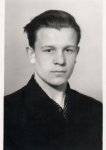
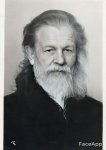
I had only two photographs of my paternal grandfather, so I used the second one for this. I uploaded it to a neural network and obtained an image of my grandfather 20–30 years older. The neural network also added a beard and gray hair.
Of course, I understand that this is all a very, very approximate likeness. But it may be better than nothing.
You can do the same with a photograph of the great-grandmother's daughter, who for obvious reasons also resembles her. You can also "age" her with the help of a neural network and ultimately obtain at least an approximate image of the great-grandmother.
Moreover, if you know that one daughter RESEMBLES the great-grandmother MORE, and you have a photograph of her, then of course you should use that photograph.
Ultimately, it is possible to approximately recreate all the missing images of great-grandparents.
But in 50% of cases, many people do still have photographs of their great-grandparents. Even if the quality is poor, they exist, and they can be improved with those same neural networks.
Old photographs really can be improved very significantly.
And when you see an old photograph not only enhanced by a neural network but also colorized, a genuine wow effect occurs. It gives the photographs a second life.
So as not to make unsupported claims, I will give a specific, visible example.
Here is a photograph I have:
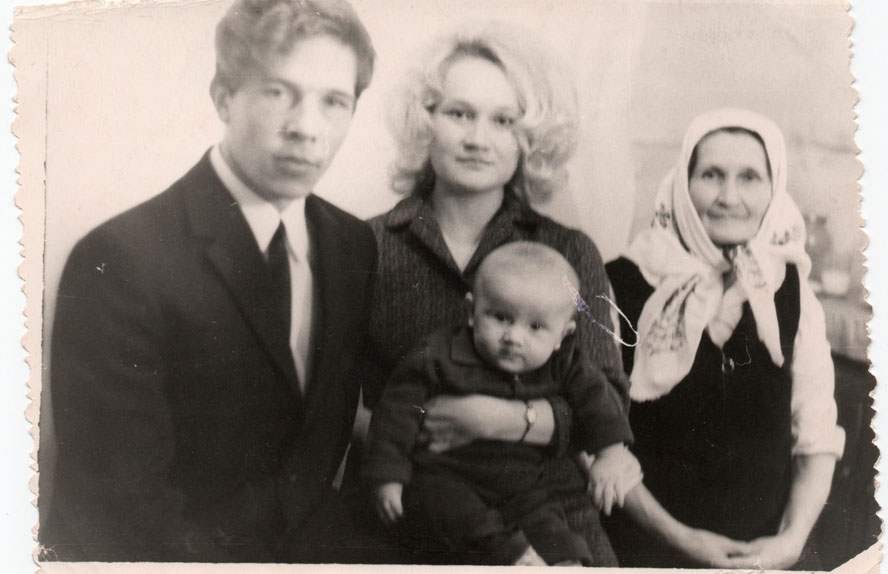
A classic photograph with low-quality detail, blurring, scratches, and even cracks.
Here is how the neural network improved it:

I think you can see how much better everything became.
And now in color:

Of course, the colorization would have been better if the photograph itself had been better. But look at the original and compare them—this is a significantly improved photograph.
And finally, I made a video from this photograph of my maternal grandmother:
Если видео не проигрывается - обновите страницу
I did not use this video in my Rodovoye Drevo, because I have a better photograph of my grandmother. I used this photograph as an example to show that even such a rather poor-quality photograph can be turned into an acceptable video (animation) for your Video Rod.
I will post everything I eventually created soon—that is, a video of my Rodovoye Drevo.
If at some point during this course you begin to realize that you cannot make a video of your Rodovoye Drevo, that you do not even understand what "DPI value when scanning a photograph" means, or what scanning a photograph even is (let alone what a neural network is), but you really want to have such a "Video of your Rodovoye Drevo," then I will be able to help you.
I am currently preparing a way to help you create this more advanced version of your Rodovoye Drevo.
So keep an eye on this course topic.
As you know, the main practice for working with the Rod here is: Description of all the School's paid courses
There I provide the correct technique for creating a Rodovoye Drevo and working with the Rod. Many people have heard of it, and many create it using their own methods or methods that are already known (so to speak, generally accepted). How to create a Rodovoye Drevo and which method to choose is your decision.
In my course, I explain one of the ancient methods of creating a Rodovoye Drevo. And judging by the feedback, it resonates with many people. Because you are not simply doing something—you understand what you are doing and why.
This method is quite simple. It is accessible to everyone.
But new technologies and neural networks led me to consider the possibility of improving the practice with a Rodovoye Drevo.
What do I mean?
For many people, a Rodovoye Drevo primarily consists of a tree in the background with photographs placed on it: of their father, mother, grandmother, great-grandfather, and so on. Everyone has this same image in mind—a kind of tree, usually with black-and-white photos of relatives on it. A classic, so to speak.
And that is good.
But modern technologies make it possible to improve this simple procedure in certain ways.
At the very least, make the photographs colorized. Neural networks already do this well.
But that is not all.
Neural networks can turn an old photograph into a video!
I will not hide the fact that I was deeply impressed when I saw a video of my great-grandmother on my father's side.
By some miracle, I have a photograph that survived, showing my grandfather, grandmother, and great-grandmother.
I will post it here:
I scanned it. In reality, it is small, but after scanning it looks quite good. By that I mean that the faces are more or less clearly visible. It could have been worse.
And I never saw any of the people shown in the photograph alive. My grandfather and grandmother died during the Great Patriotic War. My father was raised in an orphanage from the age of five. There was no time for photographs. A postwar childhood that began with begging in the streets and continued in an orphanage... I think you roughly understand what that means.
And then I saw my great-grandmother (she is sitting on a chair in the photograph) turn her head, blink, move her eyes, and smile!
Если видео не проигрывается - обновите страницу
And it looks incredibly realistic. See for yourself.
I also made a video of my paternal grandfather and grandmother. It literally felt like a MEETING.
I saw my grandmother and grandfather looking at me and smiling at me...
Если видео не проигрывается - обновите страницу
Если видео не проигрывается - обновите страницу
I know that many people experience far more intense emotions when they see similar videos made from old photographs. Because there is an effect... I do not even know how to put it... something like resurrection. Or a time machine.
And then I thought: why not place videos on the Rodovoye Drevo instead of ordinary, drab photographs?
And I did it.
On both my father's and my mother's side. Of course, I do not have photographs of all my great-grandmothers and great-grandfathers, but even what I managed to create was incredible. All my closest relatives in the ROD immediately looked at me and moved.
It was as if I found myself in the company of all my closest relatives.
A very powerful energy comes from this video.
You simply want to sit and be in this amazing Society.
Like meditation.
The strongest possible connection with the Rod.
It was not like that with photographs.
In this topic, I will explain what I did and how. And as I said above, all of this has grown into another course, which is available here in this topic.
Anyone can do this if they wish. But it is much more complicated than placing photos on the Tree.
Of course, the effect will be stronger if you have photographs of all your relatives, especially your great-grandfathers and great-grandmothers.
But if you do not have them, or only have some of them, that is perfectly normal, since most people are in the same situation. Especially those over 50.
In our time, the younger generation has been luckier, because they have not only photographs but even videos of their great-grandmothers.
But there are many people who do not have this opportunity.
There are ways to fill the missing cells on the Rodovoye Drevo.
For example, someone may simply have a drawn portrait or even a painting of their great-grandparents. Of course, this applies to only a small percentage of people.
There is another option. You commission an artist, and they draw the person based on your description. Or you ask your mother or father to do it, since they remember what their parents looked like, and the artist can recreate their appearance from their descriptions.
Moreover.
You can give the artist, for example, a photograph of the great-grandfather's son who resembles him.
And explain that the eyes were slightly larger, or the chin more rounded, and so on.
I think you understand the idea.
I myself commissioned an artist to recreate my maternal grandfather. I had a terribly old and only photograph of him in which he was barely visible, and I also knew that one of his sons looked especially much like him.
You can guess what I did. I asked the artist to combine these two appearances.
As a result, I had an image of my grandfather. I already had a photograph of my grandmother.
I also turned his drawn image into a video.
It turned out well. Of course, it is an approximate likeness, but it is better than nothing.
In the end, I had images of people whom I had never expected to see again.
I had all my grandmothers and grandfathers. However, I did not have any great-grandfathers or great-grandmothers—only one great-grandmother on my father's side. I have already shown you her video.
And then I had another thought.
Yes, I could simply leave the frame empty. But what if I tried taking a photograph of my grandfather, who was my great-grandfather's son and RESEMBLED him (for obvious reasons), and once again used another neural network that makes faces look older? I think some of you may already have heard of such technologies, where a neural network transforms a photograph of a face into what it might look like 20 or 30 years later.
I had only two photographs of my paternal grandfather, so I used the second one for this. I uploaded it to a neural network and obtained an image of my grandfather 20–30 years older. The neural network also added a beard and gray hair.
Of course, I understand that this is all a very, very approximate likeness. But it may be better than nothing.
You can do the same with a photograph of the great-grandmother's daughter, who for obvious reasons also resembles her. You can also "age" her with the help of a neural network and ultimately obtain at least an approximate image of the great-grandmother.
Moreover, if you know that one daughter RESEMBLES the great-grandmother MORE, and you have a photograph of her, then of course you should use that photograph.
Ultimately, it is possible to approximately recreate all the missing images of great-grandparents.
But in 50% of cases, many people do still have photographs of their great-grandparents. Even if the quality is poor, they exist, and they can be improved with those same neural networks.
Old photographs really can be improved very significantly.
And when you see an old photograph not only enhanced by a neural network but also colorized, a genuine wow effect occurs. It gives the photographs a second life.
So as not to make unsupported claims, I will give a specific, visible example.
Here is a photograph I have:
A classic photograph with low-quality detail, blurring, scratches, and even cracks.
Here is how the neural network improved it:
I think you can see how much better everything became.
And now in color:
Of course, the colorization would have been better if the photograph itself had been better. But look at the original and compare them—this is a significantly improved photograph.
And finally, I made a video from this photograph of my maternal grandmother:
Если видео не проигрывается - обновите страницу
I did not use this video in my Rodovoye Drevo, because I have a better photograph of my grandmother. I used this photograph as an example to show that even such a rather poor-quality photograph can be turned into an acceptable video (animation) for your Video Rod.
I will post everything I eventually created soon—that is, a video of my Rodovoye Drevo.
If at some point during this course you begin to realize that you cannot make a video of your Rodovoye Drevo, that you do not even understand what "DPI value when scanning a photograph" means, or what scanning a photograph even is (let alone what a neural network is), but you really want to have such a "Video of your Rodovoye Drevo," then I will be able to help you.
I am currently preparing a way to help you create this more advanced version of your Rodovoye Drevo.
So keep an eye on this course topic.



 Perhaps other directions will open up as well.

 grandmother and great-grandmother